A Hotels With Jacuzzi In Room Guide to Switzerland: When to Go, Where to Stay
Everything you need to plan your hotels with jacuzzi in room trip to Switzerland — best time to visit, what to do, and the top hotels with honest reviews.
Published May 21, 2026
Switzerland concentrates some of Europe's most celebrated ski resorts and alpine spa retreats within a few hours of each other — and the country's deeply embedded wellness culture means an in-room jacuzzi isn't a luxury add-on here, it's practically expected. This guide is for travelers planning a Swiss stay where the room itself is part of the experience, whether that's a ski chalet in Zermatt, a hillside spa above Lake Lugano, or a Bernese Oberland wellness resort between mountains and lake.
In this guide
When to Go
Switzerland's appeal shifts dramatically by season, and the timing of your visit shapes what the jacuzzi-in-room experience actually delivers.
- Peak (December–March): Alpine resorts like Zermatt and Verbier hit capacity; ski conditions are excellent but rates for suites with in-room jacuzzis run 30–50% higher than shoulder season. Book three to four months out for Valais properties.
- Shoulder (April–May, September–October): Crowds thin, rates drop, and the scenery — wildflower meadows in spring, sharp foliage in autumn — is often at its best. Many wellness hotels run dedicated spa packages in these windows specifically targeting couples.
- Off-season (June–August): Counterintuitively the busiest period in lake and city destinations like Lucerne and Ticino. Alpine resorts are quieter than in winter and better value for non-skiers who want the spa without the peak pricing.
Bottom line: For ski-and-soak trips in Valais or Graubünden, shoulder season delivers the best value without sacrificing scenery; for Ticino and lake-country wellness properties, late spring and early autumn beat the summer rush.
Getting There
Switzerland's airport network is compact but well-placed, and the right entry point can cut your transfer time significantly depending on target region.
| Airport | Code | Best for | Transfer |
|---|---|---|---|
| Zurich | ZRH | Lucerne, Graubünden, Bern, Freiburg | ~10–45 min to city |
| Geneva | GEV | Valais, French-speaking west | ~20 min to city; ~2 hr to Zermatt |
| Basel | BSL | Freiburg, northwest Switzerland | ~45 min to Freiburg |
| Milan Malpensa | MXP | Ticino via Lugano | ~1 hr to Lugano |
| Bern Belp | BRN | Bernese Oberland, central Switzerland | ~25 min to Bern |
Travelers targeting Zermatt or upper Valais should fly Geneva rather than Zurich — the direct rail connection begins through French-speaking Switzerland and the mountain scenery starts well before arrival.
What to Do
Valais
Valais is home to Zermatt — one of the few car-free resorts in Europe — and the combination of the Matterhorn as a constant backdrop, 360 kilometres of linked piste, and a serious après-ski spa culture makes the case for an in-room jacuzzi better here than almost anywhere in Switzerland. Verbier draws an international crowd with a more energetic party edge; Saas-Fee offers a quieter family-oriented alternative with year-round glacier skiing above 3,500 metres.
- Best for: Couples combining serious mountain time with evenings in private jacuzzi suites — the transition from slope to soak is the whole point here
- Don't miss: The Gornergrat cogwheel railway to 3,089m for close-range Matterhorn views that no hotel terrace can replicate
- Timing: January and February for snow reliability; late March for long sunny days and softening conditions without the crowds
Ticino
The Italian-speaking canton south of the Alps operates at a different tempo from the rest of Switzerland — palm trees fringe Lake Lugano, risotto replaces rösti, and the sun exposure that northern cantons rarely see arrives here reliably. The wellness scene leans toward thermal bathing and panoramic outdoor circuits, and several hilltop properties pair indoor jacuzzi pools with unbroken lake-and-mountain views. After a morning hike through chestnut forests, the afternoon spa run feels genuinely earned.
- Eat here: Grotto dining — informal stone-walled restaurants deep in village lanes — for lake fish, local Merlot del Ticino, and polenta dishes that don't exist in German Switzerland
- Getting there: Direct trains from Zurich via the Gotthard Base Tunnel, the world's longest railway tunnel at 57km, reach Lugano in under two hours
- Combine with: A day trip to Locarno's Piazza Grande, Switzerland's lowest-altitude town, with a palm-lined waterfront that reads more Italian Riviera than Alpine
Lucerne
Lucerne sits at the confluence of a fjord-like lake and four alpine peaks, and it functions as Switzerland's most accessible showcase of both scenery and craft — the 14th-century covered wooden bridge, the sandstone Lion Monument carved directly into a cliff face, and a waterfront old town that manages to look implausibly cinematic even in poor weather. For jacuzzi-in-room travelers, the city works well as a base with day trips to Mount Rigi or Pilatus, and upscale properties here treat the private evening soak as post-excursion recovery.
- From the room: Mount Pilatus visible above the fog line from upper-floor hotel windows on clear winter mornings — the summit sits at 2,132m and the cog railway up it is the world's steepest
- Don't miss: The Swiss Museum of Transport — one of the most genuinely engaging infrastructure museums in Europe, and worth two hours on any rainy afternoon
- Timing: Autumn visits catch the lake reflections at their clearest; avoid August when day-tripper volume peaks and the waterfront becomes congested by early morning
Graubünden
Switzerland's largest and most linguistically diverse canton — Romansh, German, and Italian are all spoken here — Graubünden contains St. Moritz, Davos, and the full length of the Engadin Valley. It is serious ski territory and serious spa territory, and the tradition of thermal bathing at Bad Ragaz and Vals (where Peter Zumthor's stone thermal baths have been an architectural pilgrimage site since 1996) adds real cultural weight to the après-ski circuit.
- Don't miss: The Vals thermal baths by Peter Zumthor — the raw stone architecture and the silence inside make it unlike any other spa facility in Switzerland
- Skip if: Budget is a constraint — Graubünden's top properties consistently run higher than comparable hotels in Lucerne or Ticino
- Combine with: The Bernina Express panoramic train from Chur through the Engadin to Tirano in Italy — four hours of documented alpine scenery including the UNESCO-listed viaducts above the snowline
Where to Stay
Hotel ZERMAMA Zermatt

Hotel ZERMAMA Zermatt sits in the car-free village at the foot of the Matterhorn, positioning it among the most convenient ski-in setups in Valais. The hot tubs are engineered for the après-ski loop — placed so guests move from mountain to soak with minimal friction, with views across the rooftops toward the peak.
"The room I stayed in was not only comfortable but also thoughtfully designed with skiers in mind. The cozy furnishings and spacious layout provided the perfect retreat after a long day on the mountain. One of the highlights of my stay was the hotel's amenities. From the well-equipped ski storage area to the soothing hot tubs , every aspect of the hotel was designed to enhance the skiing experience and ensure guests' comfort and relaxation." — Verified guest
Deltapark Vitalresort
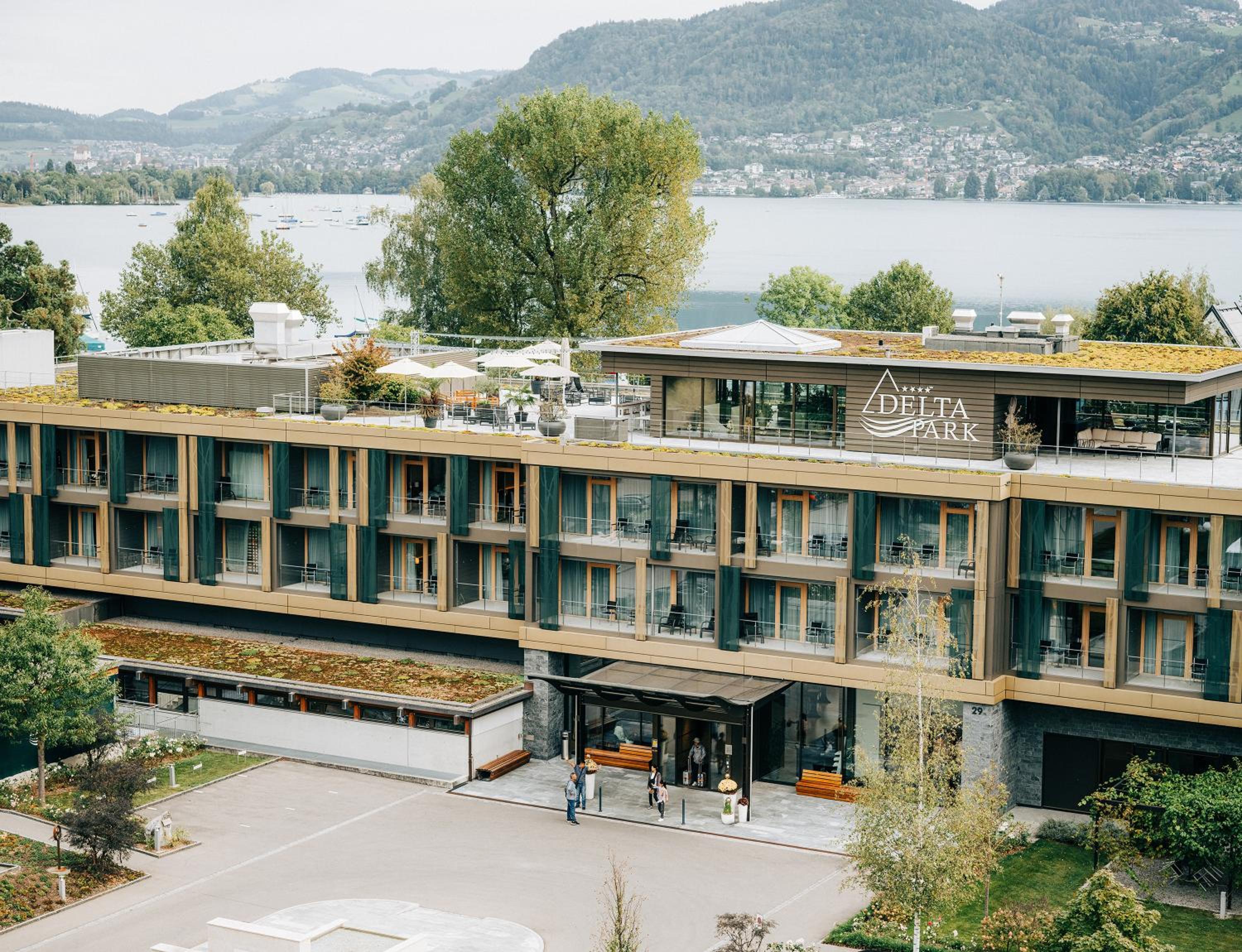
Deltapark Vitalresort occupies a lakeside position between Spiez and Thun on the Thunersee, with the Bernese Alps forming the backdrop and the lake immediately accessible by foot. The wellness installations are structured as the main event rather than a hotel sideline, and the Junior Suite category adds meaningful in-room extras for guests prioritizing the jacuzzi experience over ski access.
"We returned to this hotel after a few other stays and were happy to find that the staff is still as friendly and helpful as ever. We lover the wellness installations which are really of top quality and for all tastes. The situation - between Spiez and Thun is very convenient and easily accessible by public or private transport. We use the Juniorsuite which has a lot of extras added and is extremely comfortable." — Verified guest
Hôtel Cailler & Bains de la Gruyère
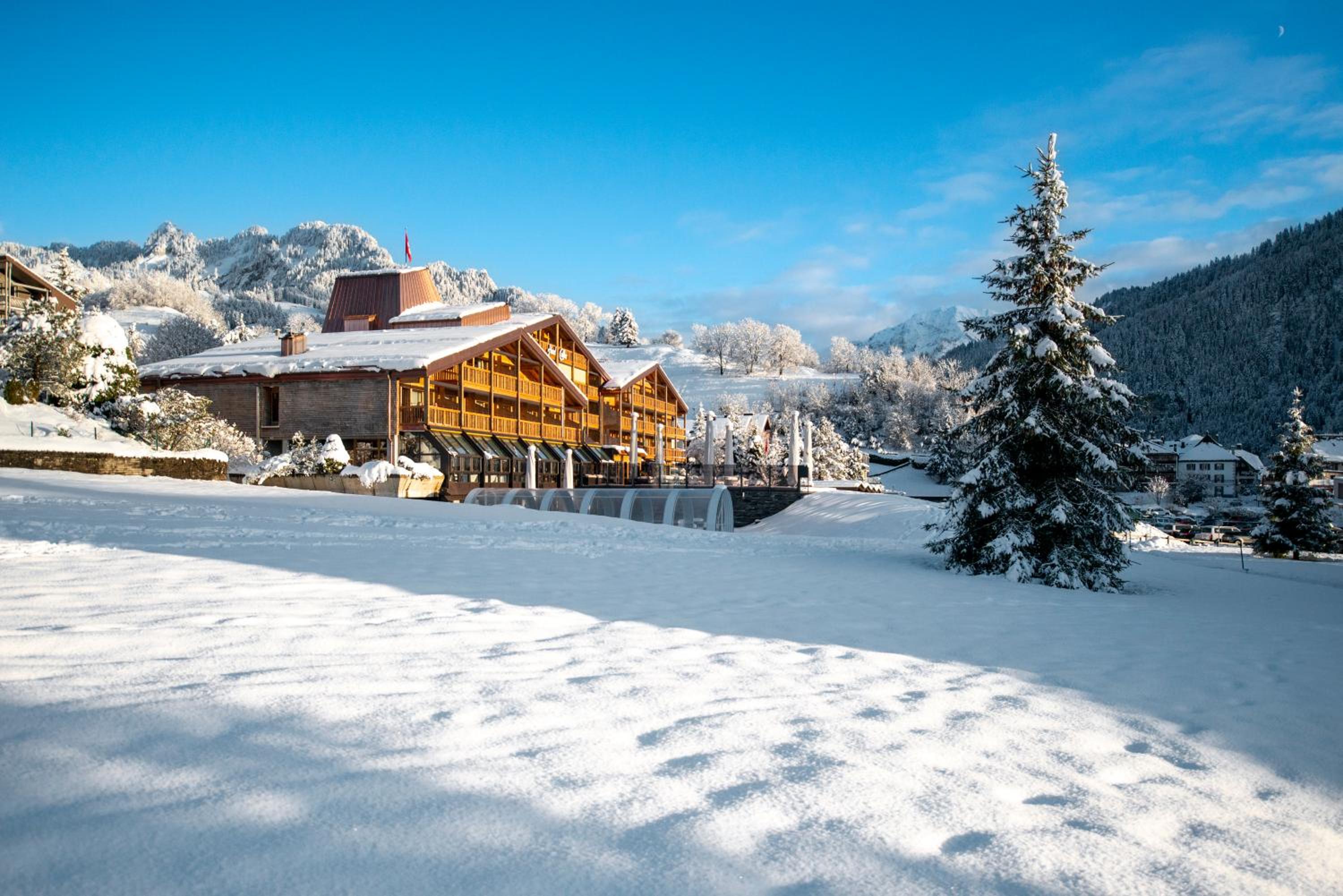
Hôtel Cailler & Bains de la Gruyère sits in the village of Charmey in the Fribourg Alps — quieter than the major resort towns but with immediate access to the Gruyères dairy region and Nordic skiing terrain in winter. The spa complex is the property's centrepiece: thermal pools feed into outdoor jacuzzi spaces with a forested valley as backdrop, and the indoor-outdoor circuit is unusually well integrated for a hotel of this size.
"The health center is another level! Amazingly beautiful. You can come out from the pool with a totally positive mood. It is very convenient for couples (warm water, jacuzzi spaces, breath-taking view, calm). It is also very clean." — Verified guest
Boutique Hotel Bellevue
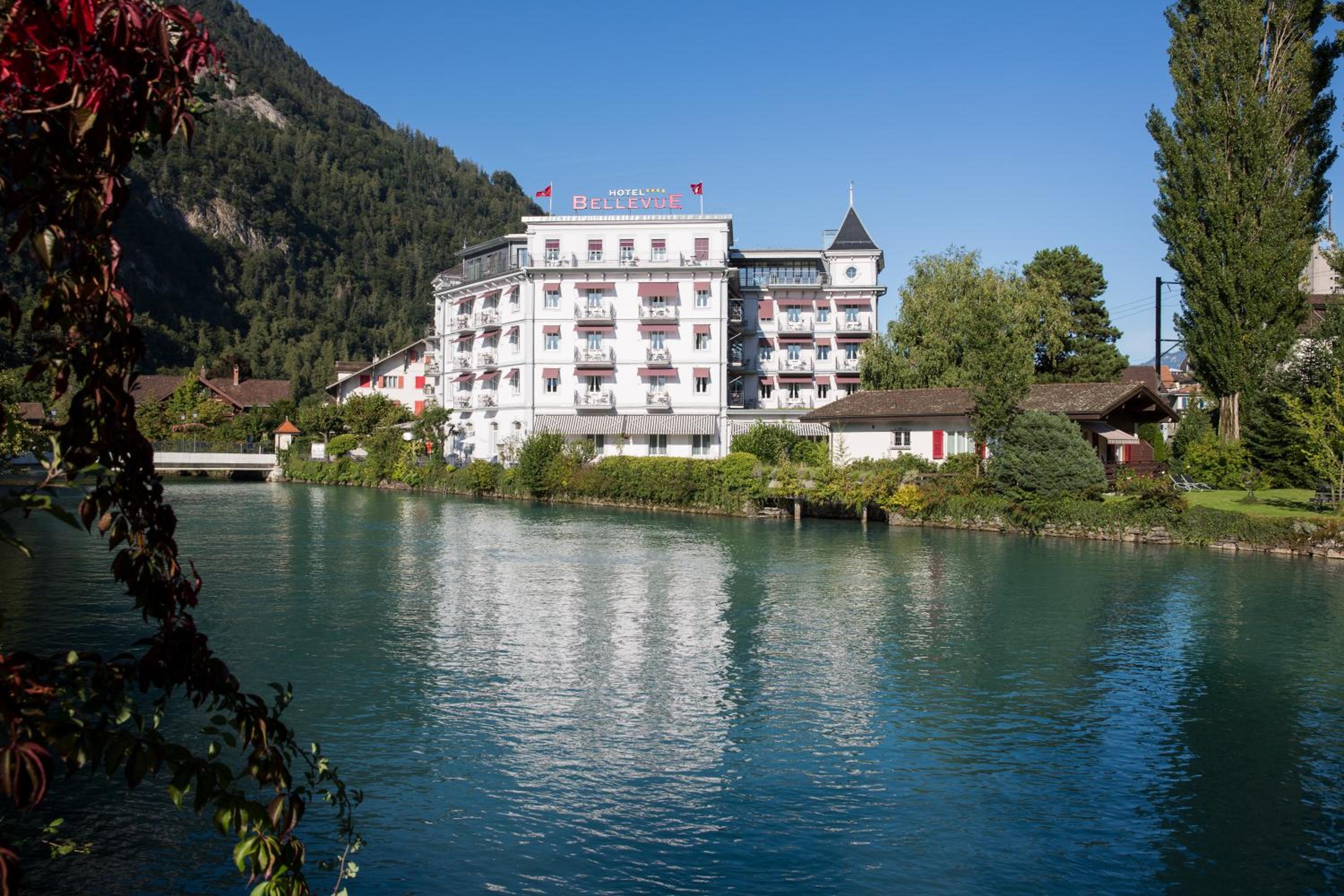
Boutique Hotel Bellevue is a compact, carefully run property with a direct sightline to the Bernese Oberland peaks from the room windows. The facilities punch well above the hotel's size: a hot pool, sauna, and private jacuzzi access that guests consistently flag as the defining feature of their stay, particularly after a day on the surrounding trails.
"Location and Facilities (hot pool & sauna, jacuzzi - fabulous)" — Verified guest
Kurhaus Cademario

Kurhaus Cademario sits on a forested hillside above the town of Cademario in Ticino, with Lake Lugano and the surrounding peaks visible from both the rooms and the spa terrace. The indoor jacuzzi pools connect directly to an outdoor circuit overlooking the lake, so guests can shift between thermal sessions and open-air soaking depending on the hour — a setup that works especially well as the afternoon light drops across the water.
"The SPA facilities are out of this world especially the pools and jacuzzis indoor which leads to outdoors overlooking the lake and Mountains. Simply fantastic after a morning trekking in either of the nearby forests we use to indulge and relax at the SPA." — Verified guest
FAQ
Do Swiss hotels with jacuzzi in room typically mean a private in-room tub or a shared spa jacuzzi?
Both exist, and the distinction matters for how you book. True private jacuzzis built into the bathroom or a room alcove are found mainly in boutique properties and named suite categories. Many Swiss wellness hotels use the term to describe shared spa pools with jacuzzi jets accessible to all guests. Properties like Deltapark Vitalresort offer both: spa circuits open to all guests plus room categories with private in-room jacuzzis. Always verify the specific room type, not just the hotel facilities listing.
Which Swiss region has the most hotels with jacuzzi in room?
Freiburg leads with around 280 properties, followed by Bern with 242. For travelers specifically wanting an alpine setting, Valais (217 hotels) gives the best combination of mountain scenery and jacuzzi-equipped rooms. Ticino (127 hotels) is the strongest option for a warmer, more southern atmosphere. Lucerne (193 hotels) sits in the middle ground — city access with lake and mountain scenery within an hour.
How far ahead should I book a jacuzzi suite in Switzerland during ski season?
For the main winter window (December–February), properties in Zermatt and Verbier in Valais book out 3–4 months in advance for suite categories with private jacuzzis. Shoulder season (March–April) gives considerably more flexibility — a 4–6 week lead is usually sufficient. Wellness-focused properties outside ski areas, like Deltapark or Kurhaus Cademario, have more year-round availability and can often accommodate 2–3 weeks notice even in busy months.
What's the price difference between a standard room and a jacuzzi suite in Switzerland?
The premium varies by region:
- Valais ski resorts: Jacuzzi suite upgrades typically add CHF 80–200/night over a standard double
- Bernese Oberland wellness resorts: Suites with in-room jacuzzis often start at CHF 250–350/night; the upgrade from standard rooms adds roughly CHF 60–120
- Ticino: Generally the most accessible pricing; in-room jacuzzi rooms from around CHF 150–200/night
Swiss hotel pricing is transparent, but check whether breakfast is included — it often adds CHF 30–50/person/day and significantly affects the overall cost comparison.
Is Switzerland better for jacuzzi hotel breaks in winter or summer?
Ski destinations like Valais and Graubünden are unambiguously strongest in winter, when the in-room jacuzzi completes the après-ski loop. But properties in Ticino and around the Thunersee — where Deltapark is based — work genuinely well year-round: outdoor thermal pools and lake views hold up as well in June as in January. Summer visitors to Lucerne benefit from lower rates than the ski-season equivalent and significantly fewer crowds at the spa facilities.
Can I reach these regions without renting a car?
Switzerland's public rail network handles almost all of it. Valais resorts including Zermatt are fully accessible by train from Geneva airport in under 2.5 hours. Ticino connects to Zurich via the Gotthard line in under 2 hours. Lucerne is 50 minutes from Zurich by direct train. Graubünden requires slightly more planning — Chur is the main hub with onward connections to St. Moritz and Davos — but no private transport is needed for any of these routes.
Do any of these properties offer day-spa access without an overnight stay?
Several do. Deltapark Vitalresort and Kurhaus Cademario both have day-spa programs open to non-residents. Hôtel Cailler & Bains de la Gruyère includes a public thermal bath component — the "Bains de la Gruyère" in the name refers to a literal bathing complex that operates independently of hotel occupancy. Entry typically runs CHF 30–60 for half-day access. Booking ahead is required, particularly on winter weekends.